
Begin with the trip, not the motor
The useful first question is not “Which bike has the biggest motor?” It is “What do I need this bike to do every week?”
An electric bike for a short campus trip has different priorities from one that will carry groceries, travel in an RV, or cover longer roads outside Abilene. Write down the trips you expect to make, where the bike will be stored, whether it must be lifted, and what you need to carry. That list will remove more bad options than a comparison of peak-power numbers.
Common starting points include:
- Daily transportation: predictable handling, lights, fenders, rack compatibility, and a comfortable riding position.
- Folding and travel: folded dimensions, total weight, hinge operation, and whether you can safely load it into the intended vehicle.
- Cargo and errands: payload rating, rack layout, braking, low-speed balance, and accessory compatibility.
- Relaxed recreation: easy mounting, an upright position, manageable controls, and enough range for the routes you actually enjoy.
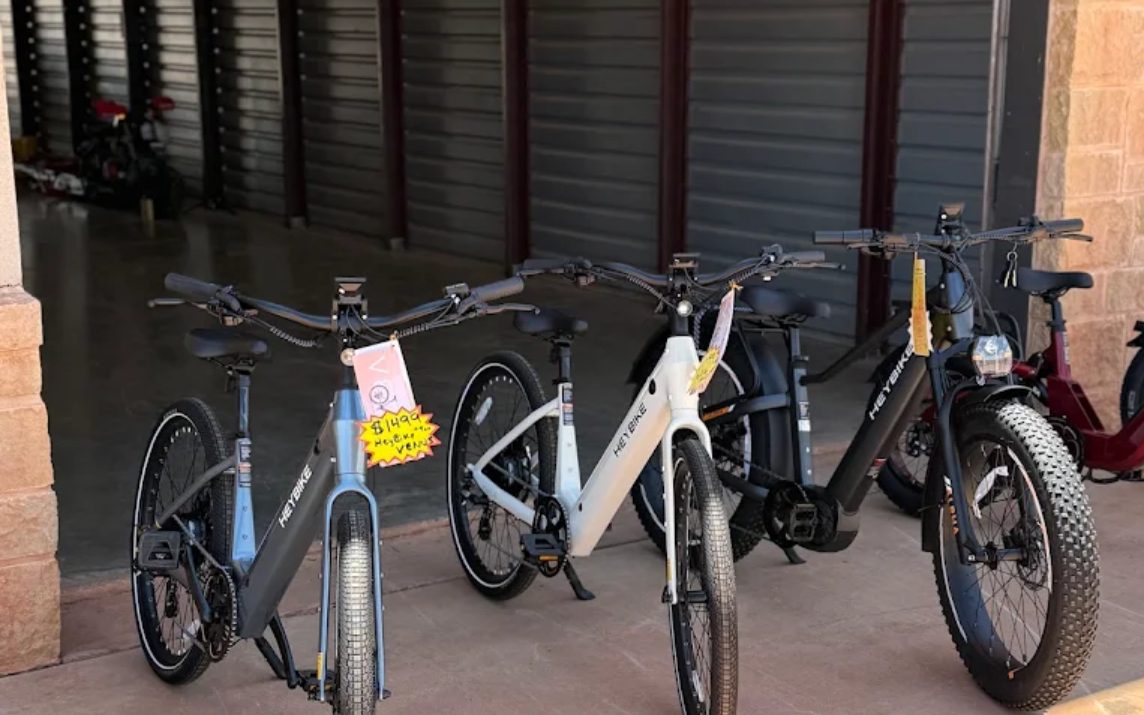
See the current electric bikes available in Abilene for examples of those different formats.
Fit still determines whether the bike gets ridden
Motor assistance does not fix an uncomfortable frame. A bike can look compact online but feel tall at a stop, or appear manageable until it has to be lifted into a truck.
Check that you can reach the grips and brake levers without locking your elbows. Make sure starting, stopping, and low-speed turns feel controlled. For a folding bike, practice the fold and lift rather than relying only on the listed weight. For a cargo bike, consider how it behaves before cargo is added.
This is where an in-person comparison has real value: fit problems become obvious in minutes.
Treat advertised range as a comparison, not a promise
Range estimates are produced under specific test conditions. Real rides change with speed, rider and cargo weight, tire pressure, hills, starts and stops, assist level, temperature, and wind.
West Texas wind is especially good at turning a comfortable outbound ride into a much harder return. Choose enough battery margin that the normal trip does not depend on achieving the best possible laboratory number.
For regular transportation, plan around the distance you need on an ordinary day and leave reserve capacity for detours, headwinds, and battery aging.
Understand the type of vehicle you are buying
A street-oriented electric bicycle and a high-powered electric dirt bike are not interchangeable categories. Pedals, labeled e-bike class, assisted speed, and motor configuration affect where a vehicle can be used.
If the goal is neighborhood, campus, bike-lane, or paved-path riding, begin with a compliant electric bicycle. If the goal is an electric trail machine, read the off-road designation first and plan where it can legally be used before choosing power or suspension. Our electric dirt bike and e-moto page keeps that distinction visible.
Include assembly and service in the purchase decision
An e-bike is still a vehicle with brakes, fasteners, wheels, tires, and electrical connections. Correct assembly and an initial safety check matter. So does knowing who can help with a flat, brake adjustment, error code, or replacement part later.
Before buying, ask:
- Who completes and checks the assembly?
- What does the manufacturer warranty cover?
- How are replacement parts obtained?
- Who will work on the bike locally?
- What happens if the shipping box arrives damaged?
Those answers are often more important over the first year than a small difference in purchase price.
Bring a short checklist to the showroom
Arrive knowing your typical distance, storage space, rider height, expected cargo, lifting limits, and budget. Bring the vehicle you plan to load the bike into when transport fit is important.
Call E-Ride’z of Abilene before visiting to confirm which models are assembled and available to compare. A focused conversation and a few minutes with the actual bikes will answer questions that product listings cannot.